What Founders Need Beyond the Lean Canvas
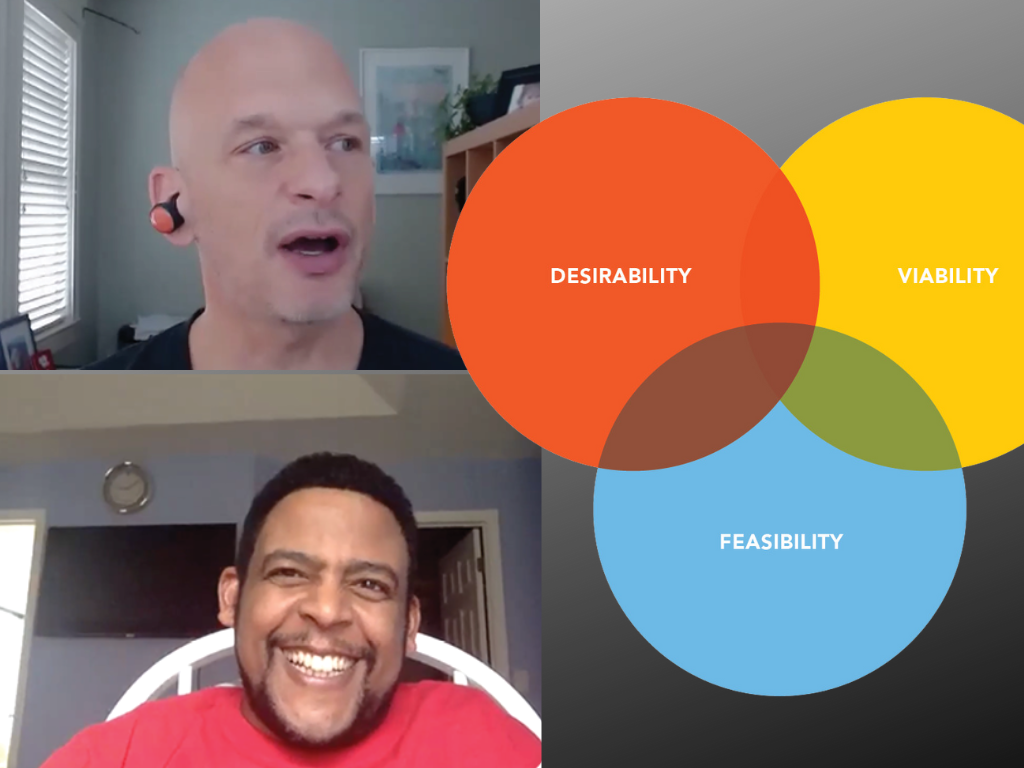
Photo Illustration by John Gauch.
Hey there - I’m a hands-on operating partner to founder-led companies and a fractional COO. Over 20+ years, I have applied my growth and operations experience to help dozens of startups (Axiom, Spartan, etc.), having begun my career as a business and technology lawyer in New York City. So far, I have helped build one high-impact startup to nearly $100M in revenue and a second to exceed that benchmark.
I’m a user and admirer of the Lean Canvas.
It’s a valuable tool in the early stages of building a new company, because it helps capture the vital elements of the potential new business.
I’d consider an initial canvas “complete” when a founder and team have evidence that you have:
identified an unmet or under-met problem
that you can solve for enough people
to meet your scale objectives
with a product you can build and deliver
via an economically viable business.
Canvas creator Ash Maurya recommends using different versions of the filled-in canvas to test different ideas leading up to that point, which is a great idea.
The canvas is useful after product launch, too. It is very challenging to get to this point, and the hard work has only begun. If you can’t figure out how to navigate the post-launch period in the company lifecycle, there will be nothing to scale. You need to continue making updates to the business as you learn from doing in the market.
Read also: The Two Mindsets Every Growth Team Needs
The canvas is complete and final only after you’ve solidified and proven out the business model, which, if the market is big enough, you can then scale up to capture.
So the Lean Canvas is not a static framework that you only use once.
The Lean Canvas is valuable, but it is not a company operating system or day-to-day management framework. A ton of activity is required to build the new business, and the Canvas does not capture or account for it.
Founders need a flexible, fast-moving strategy, planning and execution framework. You need to clarify your vision, validate Jobs to Be Done, define marketing plays, and align the team around what matters, including the people, culture, and operating norms that will enable successful execution. You need an approach built for speedy iteration and continuous learning—one designed for teams navigating the messy middle, or reckoning, between early traction and scalable growth.
Seeing a gap from my work with founders between what is required, on the one hand, and the Lean Canvas and the Entrepreneurial Operating System, on the other hand, I began documenting my business-building approach in the Venture Plan on a Page.
Read also: What Growth Founders Need to Add to EOS
See in Resources: Venture Plan on a Page (VPop)
It’s not easy to build a growth business, defying the gravity that pulls down so many companies, and achieving the velocity to scale. As a founder, you need the right set of tools to guide your company to reach the $1M, $10M, and $100M milestones. The Lean Canvas is one of the right tools. The question is what you’re going to pair it with.
Reach out if you want to discuss the toolset you’re using to build your business.